
News Center
26
2022
-
05
Some knowledge points of cast iron
Compared to carbon steel, cast iron has a higher content of C and Si in its chemical composition (C 2.5% ~ 4.0%, Si 1.0% ~ 3.0%), higher impurity elements Mn, P, S, and alloy elements in some alloy cast irons with special properties. The presence and content of all these elements will directly affect the structure and properties of cast iron.
Compared with carbon steel, cast iron contains a higher content of C and Si (C 2.5% ~ 4.0%, Si1.0% ~ 3.0%), higher impurity elements Mn, P, S, and alloy elements in some alloy cast irons with special properties. The presence and content of all these elements will directly affect the structure and properties of cast iron. Because the carbon in cast iron mainly exists in the form of graphite (G), the structure of cast iron is composed of a metal matrix and graphite. The metal matrix of cast iron includes pearlite, ferrite, and pearlite plus ferrite, which is equivalent to the structure of steel. Therefore, the microstructure of cast iron can be regarded as graphite of different shapes distributed on the steel matrix.
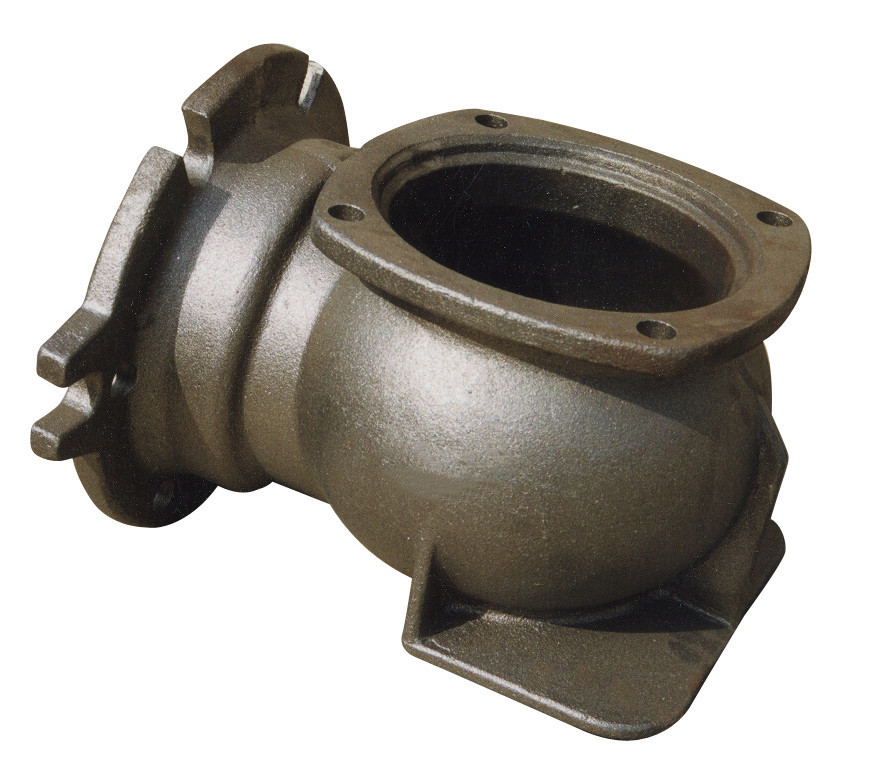
The tensile strength, plasticity, and toughness of cast iron are lower than those of carbon steel. Although the mechanical properties of cast iron are not as good as those of steel, the presence of graphite gives cast iron many properties that are not as good as those of steel. For example, good wear resistance, high vibration damping, low notch sensitivity, and excellent cutting performance. In addition, cast iron has a high carbon content and its composition is close to the eutectic composition, so cast iron has a low melting point, about 1200, and the fluidity of molten iron is good. Because graphite expands in volume during crystallization and has small transmission shrinkage, its casting performance is better than that of steel. Therefore, it is usually made into castings by casting, so it is called cast iron.
Cast iron has many classification methods. According to the form of carbon, it can be divided into three types:
1. White cast iron (referred to as white iron) 。 Carbon in white cast iron is mainly in the form of cementite (Cm), the fracture is white and bright. Its properties are hard and brittle, and it is difficult to cut. In addition to a few parts with high hardness, wear resistance, and no need for machining, or cold-hardened castings with high surface hardness and wear resistance (such as crushing plates, rolls, train wheels, etc.), it can also be used as raw materials for steelmaking and blanks for malleable cast iron.
2. Gray cast iron (referred to as gray iron) 。 Carbon in gray cast iron mainly exists in the form of flake graphite, and the fracture is gray. Gray cast iron has good casting and cutting performance, low price, and is easy to manufacture, so it is widely used.
3. Mottled cast iron (referred to as mottled iron) 。 Carbon in cast iron exists in the form of cementite and graphite. The fracture is mixed with white free cementite and dark gray graphite, so it is called mottled iron. Mottled iron is rarely used in production.
According to the different shapes of graphite, cast iron can be divided into the following four types:
(1 ) Gray cast iron, the graphite in cast iron is flake-like.
(2) The graphite in vermicular cast iron is mostly short worm-like.
(3) Nodular cast iron (also known as malleable cast iron, malleable cast iron), the graphite in cast iron is an irregular flocculent.
(4) Nodular cast iron: The graphite in cast iron is spherical.
In addition, in order to obtain certain special properties, the conventional elements in cast iron should have a specified high content and certain alloy elements should be added. This cast iron is called special performance cast iron. Such as wear-resistant cast iron, heat-resistant cast iron, and corrosion-resistant cast iron.
Cast iron
Previous Page
Next Page
Previous Page
Next Page


Shandong Gongchen Machinery Technology Co., Ltd.
Contact QQ: 258506508
Mobile Number:15621618888
Phone:0536-7691368 7691229
Fax: 0536-7691229
Contact Email:guisongzhng8@gmail.com
Website:www.shandonggongchen.com Gongchen.China Valve Castings.China
Address: Mucun Town, Fangzi District, Weifang City, Shandong Province
Public Account