
News Center
24
2022
-
10
What are the cleaning scope and methods for precision castings? The foundry introduces them to you.
What are the scope and methods for cleaning precision castings? The foundry will introduce it to you. The foundry says that cleaning is the process of removing the precision castings from the mold, removing the excess parts outside the valve body, and polishing and finishing the inner and outer surfaces of the castings.
What are the cleaning scope and methods for precision castings? The foundry will introduce them to you. The foundry says that cleaning is the process of removing precision castings from the mold, removing excess parts from the outside of the valve body, and polishing and finishing the inside and outside surfaces of the castings.
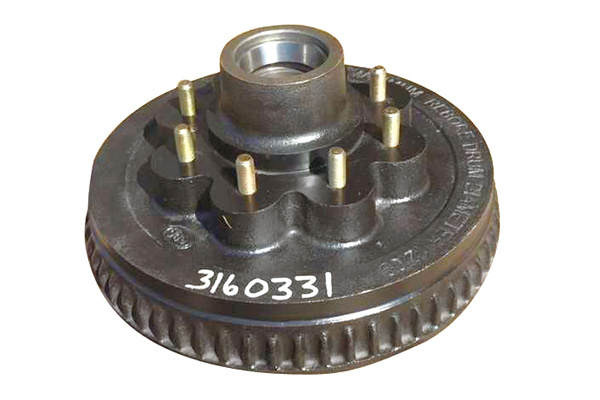
Core removal and surface cleaning:
The foundry says that it is divided into two categories: dry method and wet method. Dry cleaning is the use of mechanical equipment to clean castings. The equipment used is simple, the production efficiency is high, the adaptability to different types of castings is large, and it can effectively remove the core and clean the surface. The disadvantage is that dust is flying, the noise is loud, and the environment is polluted. Wet cleaning has no dust, but because water is used as the medium, the surface of the casting is prone to rust. A large amount of sewage and cement sand are generated during operation, which brings problems such as sand and water regeneration and sludge treatment.
Commonly used dry and wet cleaning in production include:
Drum cleaning. The foundry says that castings and pig iron are placed in a circular drum. When the drum rotates, the sand particles inside and outside the castings can be removed by the mutual impact and friction between the castings, pig iron, and waste sand, and the surface of the castings can be polished, and the flash burrs can also be partially removed. This equipment is suitable for cleaning small and medium-sized castings with simple shapes and thick walls.
Shot blasting. The foundry says that the impact force of high-speed steel shots, iron shots, and abrasive flow is used to remove the sand core and polish the surface of the castings. In addition, commonly used shot blasting equipment includes shot blasting tables and shot blasting rooms. Shot blasting machines for continuous production include chain shot blasting drums, continuous shot blasting platforms, and continuous production suspension shot blasting rooms. The operation and maintenance costs of this equipment are very high.
Hydraulic sand cleaning. The foundry says that high-pressure water is sprayed from the nozzle of the spray gun through the pipeline onto the casting to be treated, and the sand particles adhering to the core and the casting are cleaned by the kinetic energy and scouring effect of the water flow. Hydraulic sand cleaning is usually equipped with an open cleaning room composed of shaped steel and steel plates, with a turntable at the bottom. The spray gun is installed on the side wall and can be moved up and down and rotated so that high-pressure water can be sprayed to any part other than the bottom of the casting. Sometimes, in order to improve the sand removal efficiency of the surface of precision castings, abrasives such as quartz sand are introduced at the appropriate position of the spray gun to obtain a high-speed water and sand flow. Generally, this method is called hydro-sand cleaning.
Hydro-sandblasting cleaning. The foundry says that after casting, when the casting is cooled to the specified temperature, it is packed and immediately immersed in the pool. Water seeps into the casting through all the gaps, and it rapidly vaporizes and explodes when it comes into contact with high-temperature metal, and the shock wave can basically clean the sand particles attached to the inside and outside of the casting. The water jet sand cleaning method has the advantages of short operation time and high efficiency, and is widely used in steel casting workshops in China. It is generally used to process simple steel castings with a carbon content of less than 0.35%.
Foundry
Next Page


Shandong Gongchen Machinery Technology Co., Ltd.
Contact QQ: 258506508
Mobile Number:15621618888
Phone:0536-7691368 7691229
Fax: 0536-7691229
Contact Email:guisongzhng8@gmail.com
Website:www.shandonggongchen.com Gongchen.China Valve Castings.China
Address: Mucun Town, Fangzi District, Weifang City, Shandong Province
Public Account